
Play is a natural part of childhood. Children explore their surroundings, communicate with others, and learn new skills through play. For this reason, play can also become an effective way to support children during therapy. Play-based therapy uses activities that are enjoyable and meaningful while helping children develop important skills.
Every child learns differently. Some children may find structured learning difficult but become more comfortable when activities involve toys, games, movement, or creative tasks. A child development center can use play-based activities to make therapy sessions engaging and suitable for each child.
How Play Supports Development
Play gives children opportunities to practise skills without feeling pressured. Building blocks, puzzles, drawing, matching games, pretend play, and movement activities can all be used to target specific developmental goals.
During play, therapists can encourage children to communicate, follow instructions, take turns, solve problems, and interact with others. These skills can later be used at home, school, and other everyday settings.
Supporting Speech and Communication
Communication is an important part of child development. Some children may have difficulty using words, understanding language, or expressing their needs.
Play-based speech therapy for children with communication difficulties can use toys, picture cards, stories, songs, and simple games to encourage communication. A therapist may ask questions, model words, or create situations where the child has a reason to communicate.
Because the activity feels like play, children may participate more naturally.
Building Social and Behaviour Skills
Play also creates opportunities for children to learn social skills. Taking turns, sharing toys, waiting, following simple rules, and responding to others are useful skills that can be practised during games.
Play-based behaviour therapy for children with social challenges can help therapists work on positive behaviour, emotional regulation, attention, and interaction. Activities can be adjusted according to the child’s age and needs.
Developing Motor Skills
Many play activities involve movement and coordination. Puzzles, drawing, stacking blocks, catching a ball, and using small objects can help children practise different motor skills.
Play-based occupational therapy for children with motor challenges can support fine motor skills, hand-eye coordination, sensory processing, and everyday activities. Movement-based play may also be included when physical development requires additional support.
Making Learning More Engaging
Children may learn better when they are interested in an activity. Play can turn learning tasks into enjoyable experiences.
Special educators may use games, matching activities, storytelling, puzzles, and hands-on tasks to support concepts such as letters, numbers, colours, memory, attention, and problem-solving.
Personalized play-based learning support for children allows activities to be adapted to the child’s current abilities and interests.
Every Child Needs a Personalized Approach
Play-based therapy is not simply about allowing a child to play freely. Each activity can have a specific developmental purpose. Therapists observe how a child responds and adjust the activity based on their progress.
Some children may need speech therapy, while others may benefit from occupational therapy, behaviour therapy, special education, or physiotherapy. A combination of services may also be recommended depending on the child’s needs.
Parents can continue simple play activities at home. Reading stories, building with blocks, drawing together, playing turn-taking games, and encouraging communication during everyday play can reinforce skills developed during therapy.
The child development and therapy industry increasingly recognizes the value of engaging, child-friendly approaches that make learning and therapy more comfortable for children.
Play should be enjoyable, but it can also be a powerful opportunity for growth. With the right activities and professional guidance, children can practise communication, learning, social interaction, behaviour, movement, and everyday skills while having fun.
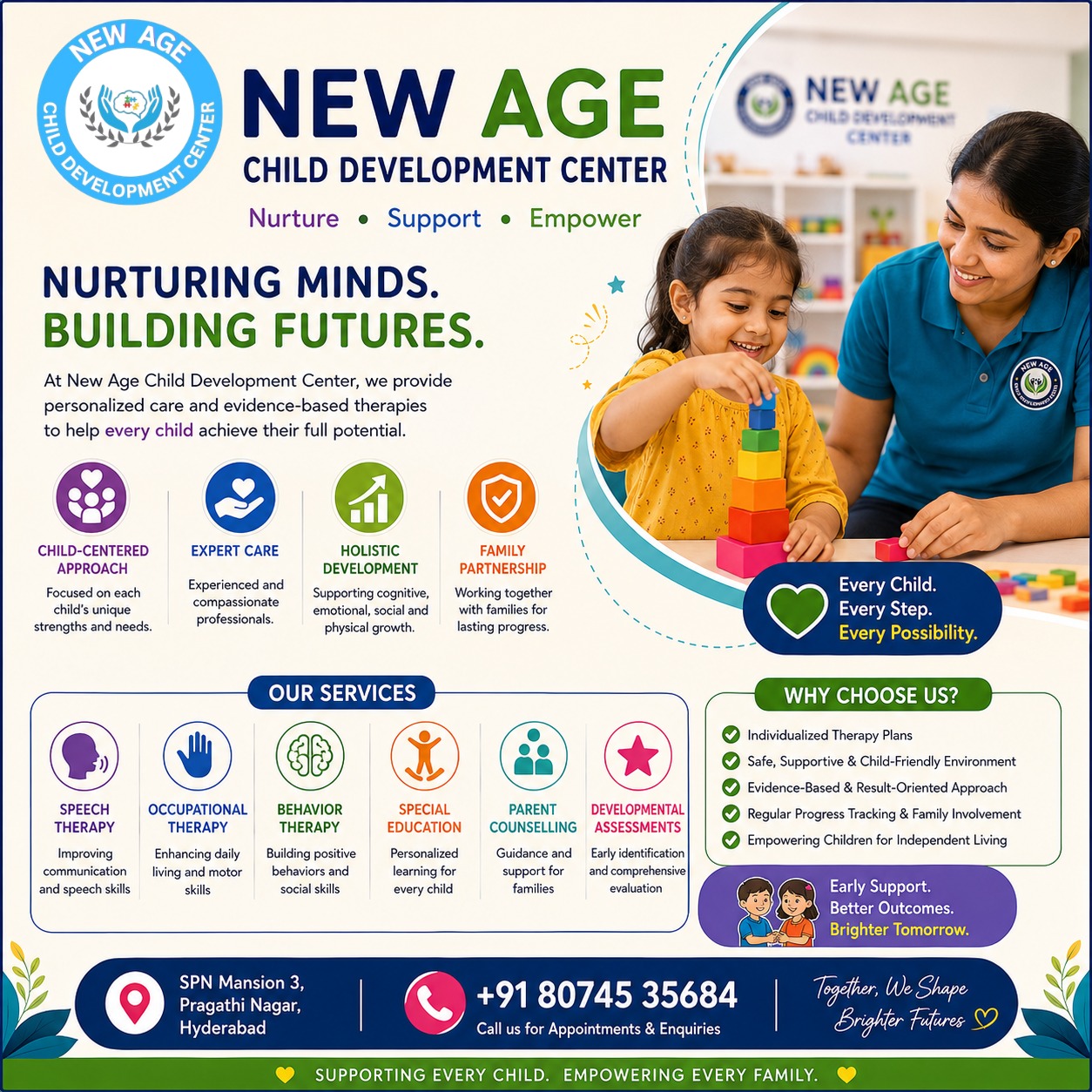
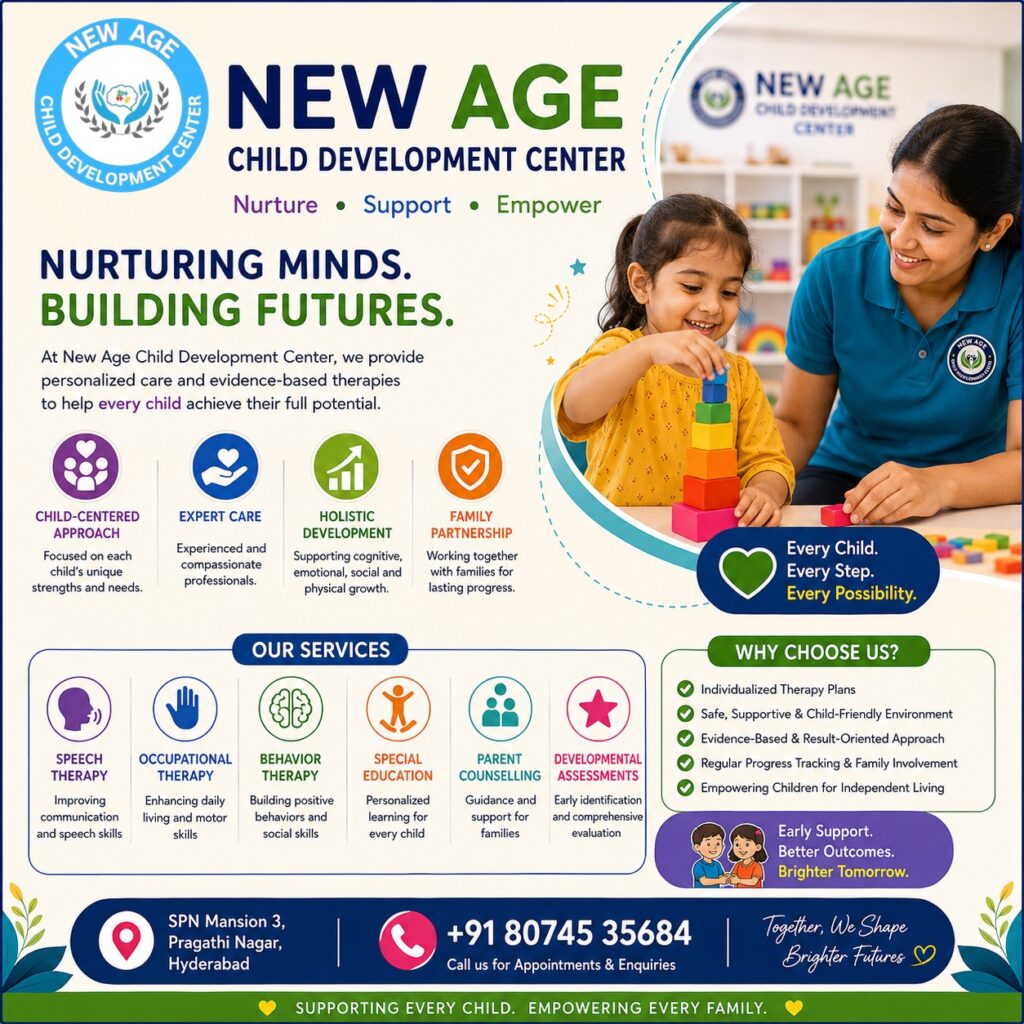
For families looking for play-based developmental support for children in Hyderabad, visit SPN Mansion 3, Pragathi Nagar, Hyderabad, or contact +91 80745 35684 for more information.
New Age Child Development provides child-focused support using individualized approaches designed to help children learn, communicate, participate, and grow with confidence.