
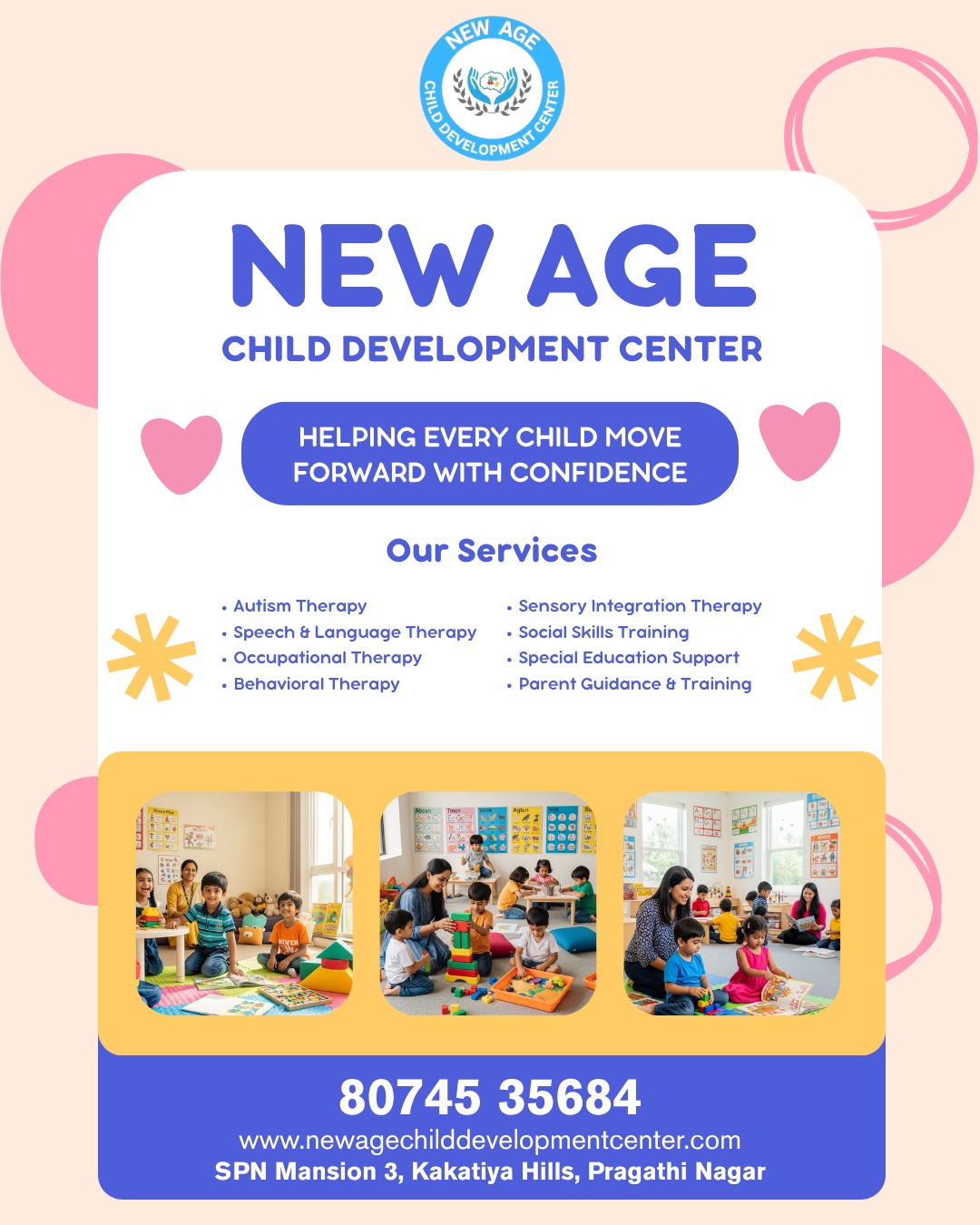
Explore different therapies for special needs children, including speech therapy, occupational therapy, behaviour therapy, and special education support. Every child is unique and develops at their own pace. Some children may need additional support with communication, movement, learning, social interaction, sensory processing, or everyday activities. With the right guidance and early intervention, children with developmental differences can build important skills and become more confident and independent.
Therapy for special needs children focuses on understanding each child’s individual strengths and challenges. Different therapies help children improve their abilities, participate in daily activities, and reach meaningful developmental goals.
At New Age Child Development Center, the focus is on supporting children’s development through appropriate therapeutic approaches and family involvement.
What Is Therapy for Special Needs Children?
Therapy for special needs children includes specialised interventions designed to support children who experience developmental delays, communication difficulties, learning challenges, sensory differences, or difficulties with daily activities.
The type of therapy depends on the child’s age, developmental needs, strengths, and individual goals.
Therapy may help children develop:
- Communication and language skills.
- Fine motor and gross motor skills.
- Social interaction and play skills.
- Attention and concentration.
- Emotional and behavioural regulation.
- Self-care and daily living skills.
- Learning and school readiness.
The goal is not to make every child develop in the same way. It is to help each child build skills that improve their everyday life.
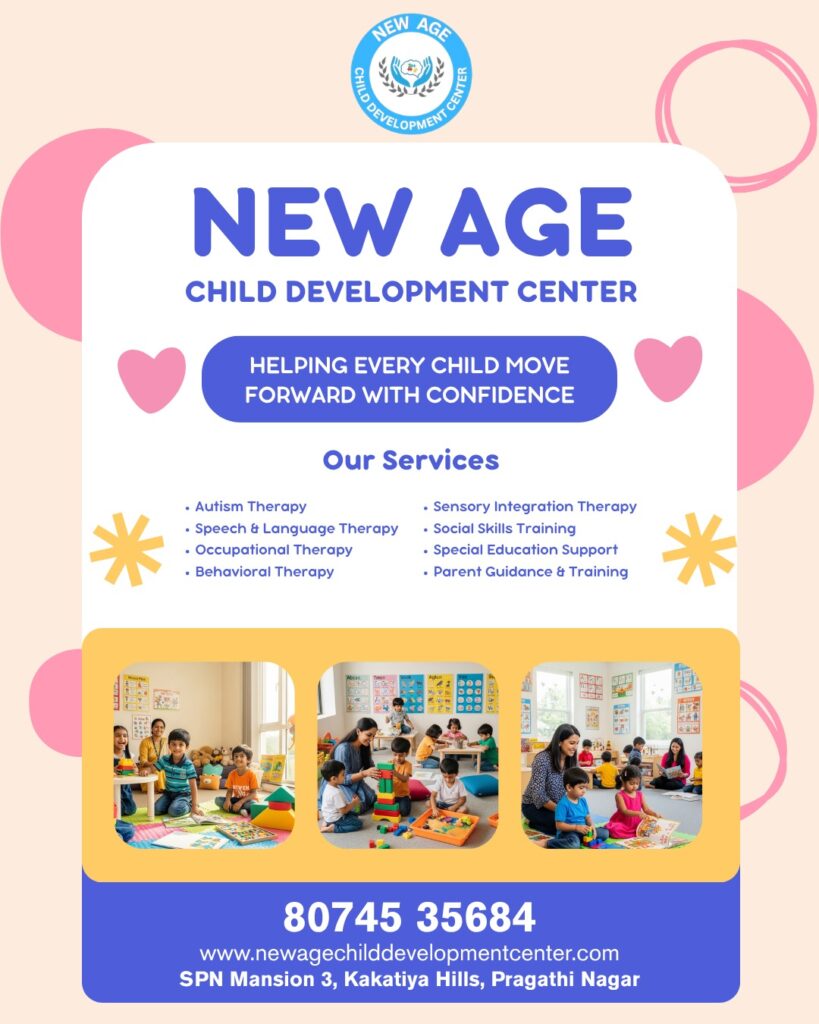
Different Types of Therapy for Special Needs Children
Different therapies support different areas of child development. Depending on the child’s needs, professionals may recommend one therapy or a combination of approaches.
1. Speech Therapy
Speech therapy for children supports communication, speech, language understanding, and social communication.
Children who have difficulty expressing their needs, understanding instructions, forming words, or communicating with others may benefit from speech and language support.
Speech therapy may focus on:
- Improving speech clarity and pronunciation.
- Developing vocabulary and sentence formation.
- Understanding and following instructions.
- Expressing needs, thoughts, and feelings.
- Developing communication during play and social activities.
2. Occupational Therapy
Occupational therapy for special needs children helps develop the skills needed for everyday activities and greater independence.
Some children may find tasks such as holding a pencil, using a spoon, dressing, buttoning clothes, or managing sensory experiences difficult.
Occupational therapy may help improve:
- Fine motor skills and hand coordination.
- Sensory processing and regulation.
- Handwriting and pencil control.
- Dressing, eating, and personal care.
- Balance and coordination.
- Play and school participation.
3. Behaviour Therapy
Behaviour therapy for children helps them develop positive behaviours, communication, emotional regulation, and social skills.
Children who struggle with transitions, frustration, following routines, or interacting with others may benefit from individualised behavioural support.
Behaviour therapy may focus on:
- Encouraging positive behaviours.
- Developing attention and cooperation.
- Managing challenging situations.
- Improving social interaction.
- Teaching appropriate ways to express emotions.
- Supporting parents with practical strategies.
4. Special Education and Learning Support
Some children need additional support to understand concepts, develop academic skills, and participate in classroom activities.
Special education support uses individualised teaching methods suited to a child’s learning needs.
It may help children with:
- Early learning and school readiness.
- Reading and writing skills.
- Basic mathematics.
- Attention and task completion.
- Memory and problem-solving.
- Learning difficulties.
5. Parent Guidance
Parents play an important role in a child’s development. Parent guidance therapy helps families understand their child’s needs and practise supportive strategies at home.
Parents may receive guidance on:
- Encouraging communication during daily routines.
- Managing challenging behaviours.
- Supporting emotional development.
- Creating structured routines.
- Encouraging independent activities.
- Practising therapy goals at home.
Which Children May Benefit from Special Needs Therapy?
Therapeutic support may be helpful for children with different developmental needs, including:
- Autism spectrum disorder (ASD).
- Speech and language delays.
- Developmental delays.
- Attention and self-regulation difficulties.
- Learning disabilities.
- Sensory processing difficulties.
- Difficulties with social interaction.
- Challenges with fine motor and daily living skills.
A child’s diagnosis alone does not determine which therapy they need. A professional assessment helps identify the appropriate support.
Why Is Early Intervention Important?
Early intervention provides children with developmental support during their early years, when they are learning many important communication, movement, social, and daily living skills.
Starting appropriate support early may help children:
- Develop communication and interaction skills.
- Improve coordination and motor abilities.
- Build confidence in everyday activities.
- Learn to manage emotions and behaviour.
- Prepare for school and social environments.
- Develop greater independence.
Every child’s progress is different. Therapy goals should be realistic, meaningful, and regularly reviewed.
How to Choose the Right Therapy for Your Child
Choosing the right therapy begins with understanding your child’s individual needs. Parents should consider the following:
- Professional assessment: Understand the child’s developmental strengths and areas requiring support.
- Individualised goals: Choose therapy based on specific developmental needs.
- Qualified professionals: Look for appropriately trained and experienced therapists.
- Parent involvement: Participate in discussions and practise recommended activities at home.
- Regular progress reviews: Monitor improvements and adjust goals when needed.
A coordinated approach between parents, therapists, and educators can help children apply their developing skills across different environments.
How Parents Can Support Development at Home
Therapy does not stop when a session ends. Everyday activities provide valuable opportunities for children to practise new skills.
Here are some simple ways parents can help:
- Read picture books together to encourage communication.
- Play turn-taking games to develop social interaction.
- Encourage children to participate in dressing and eating.
- Use simple instructions and allow enough time to respond.
- Create predictable daily routines.
- Celebrate small achievements and efforts.
- Provide opportunities for safe and enjoyable play.
Most importantly, avoid comparing your child’s progress with that of other children. Focus on individual development and celebrate every meaningful improvement.
Conclusion
Therapy for special needs children plays an important role in supporting communication, behaviour, learning, sensory development, and everyday independence. With the right therapeutic support, family involvement, and consistent encouragement, children can develop valuable skills and participate more confidently in daily life.
At New Age Child Development Center, the aim is to support every child’s individual developmental journey through appropriate guidance and child-focused intervention.
Every child has potential. The right support can help them take the next step towards a more confident and independent future.