
Learn how behaviour therapy for children in Hyderabad can support emotional regulation, communication, social skills and positive daily routines.Behaviour therapy for children in Hyderabad can help families understand these challenges and explore appropriate strategies to support their child’s development. With individualised guidance, children may learn useful skills for communication, emotional regulation, social interaction and everyday routines.
At New Age Child Development Center, the focus is on understanding each child’s developmental needs and helping families explore suitable support options.
The goal of child behaviour therapy is not to change a child’s personality, but to help the child develop meaningful skills and participate more comfortably in everyday life.
What Is Behaviour Therapy for Children?
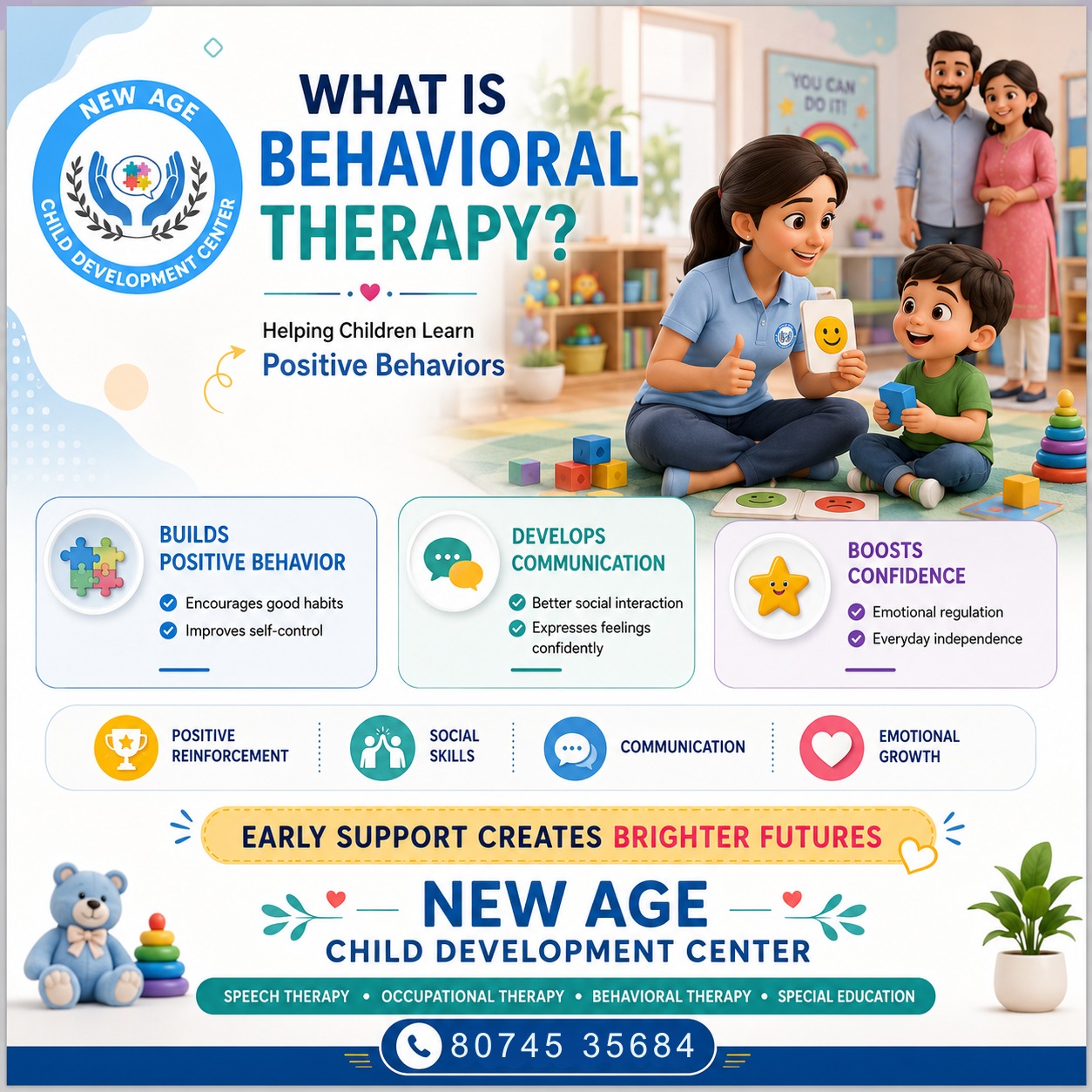
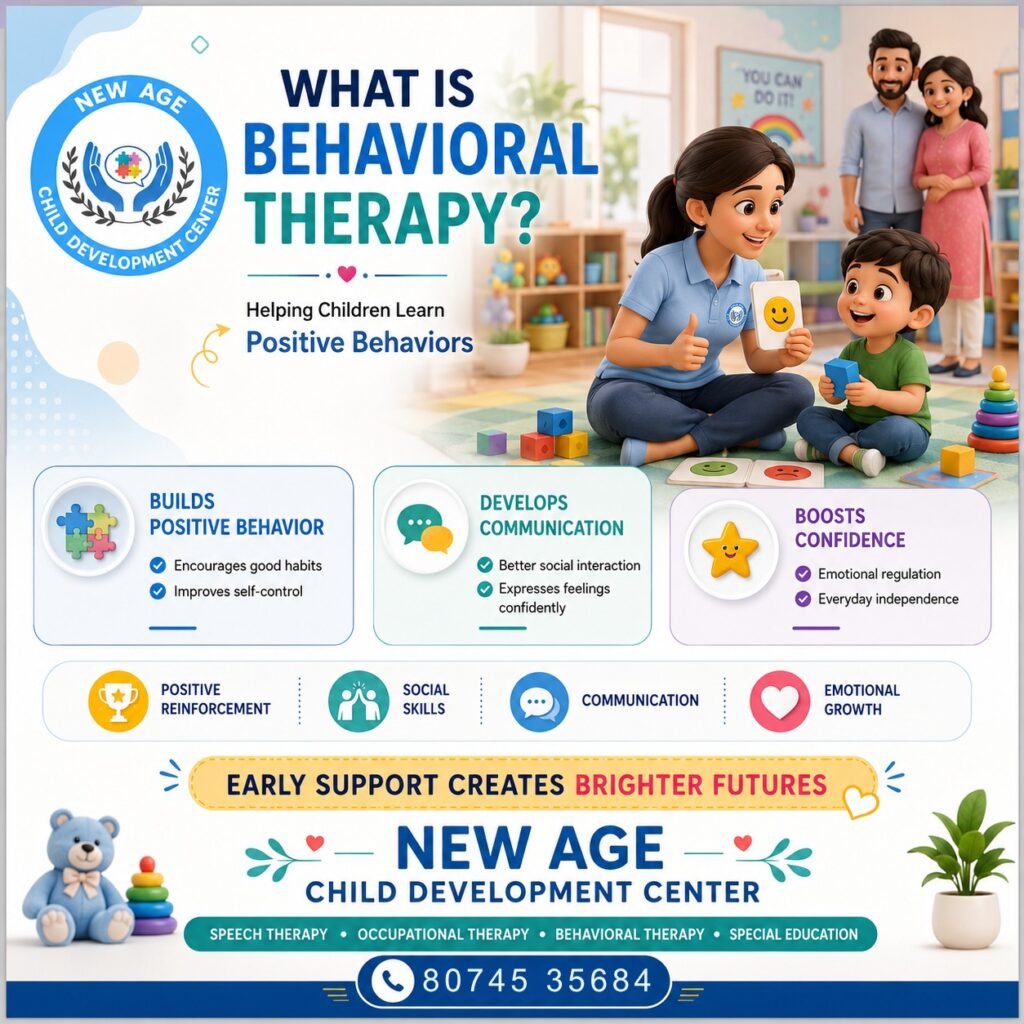
Behaviour therapy for children is a structured approach that helps children learn skills and develop responses that support their everyday functioning. It involves understanding the circumstances surrounding a behaviour, identifying possible contributing factors and teaching practical alternatives.
For example, a child who becomes upset when an activity changes may benefit from visual schedules, advance warnings and support with transitions. A child who struggles to express needs may benefit from communication strategies that make it easier to ask for help.
Depending on the child’s individual needs, behaviour therapy for kids may focus on:
- Developing communication and social interaction skills.
- Learning to manage frustration and strong emotions.
- Following daily routines and age-appropriate instructions.
- Improving participation in home and school activities.
- Learning practical problem-solving skills.
- Supporting independence in everyday tasks.
A qualified professional can help parents understand which strategies may be appropriate for their child.
Signs Your Child May Need Behavioural Support
Children may occasionally become upset, refuse tasks or struggle with changes. These experiences can be part of development. However, if difficulties are persistent and significantly affect everyday life, professional guidance may be helpful.
Consider seeking advice if your child frequently experiences difficulty with:
- Emotional regulation: Managing frustration, disappointment or excitement.
- Communication: Expressing needs, preferences and feelings.
- Daily routines: Moving between activities or adapting to changes.
- Social interaction: Taking turns, participating in play or interacting with peers.
- Following instructions: Understanding and completing age-appropriate tasks.
- Managing transitions: Moving from one activity or environment to another.
- Independent skills: Participating in everyday tasks appropriate for their developmental level.
These signs alone do not establish a diagnosis. A professional assessment can help identify possible reasons for the difficulties and determine whether additional support is needed.
How Does Behaviour Therapy Help Children?
The approach depends on the child’s needs, developmental stage and family priorities. Some common areas of support include the following.
1. Developing Emotional Regulation
Children are still learning how to recognise and manage their emotions. Some may need additional help identifying feelings and responding when situations become overwhelming.
Behaviour therapy may introduce age-appropriate strategies such as naming emotions, asking for a break, using visual emotion charts and practising calming routines.
Children need opportunities to learn and practise these skills with patience and encouragement.
2. Improving Communication Skills
Sometimes, challenging behaviour occurs when a child cannot clearly communicate what they want, need or find uncomfortable.
Support may include teaching children to request help, express preferences, communicate discomfort or use suitable alternative communication methods when needed.
For children who also experience speech or language difficulties, collaboration with a qualified speech-language therapist may be beneficial.
3. Building Social Skills
Social situations can be difficult for children who need additional support understanding interactions or participating in group activities.
Social skills development may involve practising turn-taking, sharing attention, asking for assistance, joining play and understanding everyday social situations.
Activities should be adapted to the child’s abilities and should respect their individual communication style.
4. Supporting Positive Daily Routines
Predictable routines can help children understand what is expected and prepare for upcoming activities.
Strategies may include:
- Using visual schedules.
- Giving clear, simple instructions.
- Breaking tasks into smaller steps.
- Preparing children for changes in routine.
- Encouraging effort and progress.
- Providing appropriate choices.
These strategies may help make everyday activities more manageable for both children and caregivers.
5. Behaviour Therapy for Children with Autism
Some children with autism spectrum disorder (ASD) may benefit from individualised support with communication, transitions, daily living activities and participation in their preferred activities.
Behaviour therapy for autism should focus on meaningful goals, such as functional communication, safety, independence and everyday participation. Support should respect the child’s sensory needs, preferences and dignity.
The appropriate approach depends on an individual assessment rather than the diagnosis alone.
What Is Positive Behaviour Support?
Positive behaviour support for children focuses on understanding why a behaviour may occur and teaching useful skills in a supportive environment.
Instead of focusing only on stopping a behaviour, the professional considers what the child may be communicating and what changes could make the situation easier.
For example, if a child becomes distressed during a difficult task, the team may explore whether the task is too challenging, the instructions are unclear or the child needs additional communication support.
Positive strategies may include encouragement, environmental adjustments, predictable routines and teaching alternative ways to express needs.
Support should prioritise the child’s safety, well-being, communication and participation. Punishment, humiliation and fear-based approaches are not appropriate substitutes for understanding a child’s needs.
The Role of Parents in Behaviour Therapy
Parents and caregivers play an important role in helping children practise skills outside therapy sessions. Small, consistent changes in everyday routines can create opportunities for learning.
Here are some practical suggestions:
Use clear language. Give short, age-appropriate instructions and allow your child time to respond.
Maintain predictable routines. Visual schedules and familiar routines can help children prepare for daily activities.
Encourage positive skills. Recognise helpful behaviours, attempts to communicate and progress towards goals.
Understand possible triggers. Notice whether difficulties occur during transitions, noisy situations, tiredness or challenging tasks.
Offer appropriate choices. Simple choices can help children communicate preferences and participate in decisions.
Work with professionals. Follow strategies recommended by your child’s therapist and discuss any difficulties you experience at home.
Every child responds differently, so strategies should be adjusted to their developmental needs and circumstances.
What to Expect During a Behaviour Therapy Assessment
Parents may wonder what happens when they first consult a child behaviour therapist in Hyderabad. The process generally includes several stages.
- Parent discussion: The professional learns about the child’s development, strengths and the concerns experienced at home or school.
- Understanding behaviour: Relevant situations, routines, communication needs and environmental factors are explored.
- Goal setting: Individual goals are developed based on the child’s needs and family priorities.
- Support planning: Appropriate strategies and activities are selected.
- Progress review: The professional and family review progress and make adjustments when necessary.
The frequency and duration of therapy vary from child to child. A provider should explain the proposed approach and how progress will be evaluated.
Choosing Behaviour Therapy for Children in Hyderabad
When looking for behaviour therapy in Hyderabad, parents should consider more than the location of a centre. The quality and suitability of support are important.
Consider asking the provider:
- What qualifications and experience does the professional have?
- How are the child’s needs assessed?
- Are therapy goals individualised?
- How are parents involved in the process?
- How is progress reviewed?
- How does the approach protect the child’s dignity and well-being?
- Will coordination with other professionals be recommended if needed?
Choosing an appropriate provider can help families make informed decisions about their child’s developmental support.
Behaviour Therapy at New Age Child Development Center
New Age Child Development Center focuses on child development and family support. Parents concerned about their child’s behaviour, communication or everyday functioning can contact the centre to enquire about currently available services and assessment options.
Families searching for a child development center in Hyderabad can discuss their concerns with the centre and confirm which services are suitable for their child’s needs.