
Learn how occupational therapy supports child development by improving fine motor skills, sensory processing, coordination and everyday independence. Childhood is a time of exploration, learning and discovery. From holding a crayon and stacking blocks to dressing independently and interacting with friends, children develop important skills through everyday experiences. However, some children may need additional support to perform these activities comfortably and confidently.
Occupational therapy for children helps children develop the skills they need to participate in everyday activities at home, school and during play. Through individualised activities and guided practice, occupational therapy can support motor coordination, sensory processing, self-care skills and participation in age-appropriate tasks.
A qualified child occupational therapist works with families to understand a child’s strengths, challenges and developmental needs, helping them work towards meaningful goals.
Sometimes, a small step towards independence begins with a simple activity, a playful exercise or an opportunity to try again.
What Is Occupational Therapy for Children?
Pediatric occupational therapy focuses on helping children participate in activities that are meaningful for their everyday lives. These activities may include playing, learning, dressing, eating, drawing, writing and interacting with others.
Some children develop these abilities naturally, while others may need additional guidance and practice.
An occupational therapist evaluates the skills involved in everyday activities and identifies areas where support may be helpful. The therapy plan is then tailored to the child’s individual needs and developmental level.
Depending on the assessment, occupational therapy for kids may focus on:
- Fine motor skills: Using fingers and hands for drawing, writing and handling small objects.
- Gross motor coordination: Supporting balance, posture and coordinated movement when relevant to daily activities.
- Sensory processing: Helping children participate more comfortably in activities involving different sensory experiences.
- Self-care skills: Practising dressing, eating and other daily routines.
- Visual-motor skills: Coordinating what the eyes see with how the hands move.
- Play and participation: Building skills needed to engage in age-appropriate play and learning activities.
The goal is not to make every child perform tasks in exactly the same way. It is to help each child participate as effectively and independently as possible.
How Play Supports Occupational Therapy
Play is one of the most natural ways children explore their surroundings and practise new skills. Many occupational therapy activities use play to encourage learning while keeping children engaged.
1. Building Fine Motor Skills
Fine motor skills involve the small muscles of the hands and fingers. Children use these skills to hold pencils, turn pages, fasten buttons, pick up small objects and use utensils.
Activities such as building with blocks, threading large beads, playing with age-appropriate modelling materials and completing simple puzzles may help children practise hand control and coordination.
Fine motor skills development can support everyday tasks such as handwriting, drawing and dressing.
2. Developing Hand-Eye Coordination
Hand-eye coordination helps children use visual information to guide their movements.
Activities such as stacking blocks, placing objects into containers, drawing shapes and completing puzzles can provide opportunities to practise this skill.
A child occupational therapist may select activities according to the child’s age, abilities and specific functional goals.
3. Supporting Sensory Processing
Children experience the world through touch, sound, movement, sight, taste and other sensory information. Some children may find certain sensory experiences overwhelming, while others may seek additional movement or sensory input.
Depending on the child’s needs, sensory integration therapy or other occupational therapy strategies may help support participation in daily activities.
Activities should be selected by a qualified professional following an appropriate assessment, rather than using the same sensory programme for every child.
4. Strengthening Motor Coordination
Some children find activities involving balance, posture, body awareness or coordinated movement challenging.
When these difficulties affect everyday tasks, occupational therapy may incorporate suitable movement and play activities to practise relevant skills.
Improved coordination can support participation in playground activities, classroom tasks and daily routines, although outcomes vary from child to child.
Occupational Therapy and Everyday Independence
One important goal of occupational therapy is helping children participate in daily activities with greater confidence and independence.
Dressing and Personal Care
Children gradually learn to put on clothes, manage zippers, use buttons and participate in personal care routines. When these tasks are difficult, a therapist may break them into smaller steps and help the child practise each part.
Eating and Using Utensils
Some children need support with the motor skills or routines involved in using a spoon, fork or cup. Occupational therapy may help them practise relevant skills, depending on their individual needs.
Feeding difficulties that involve swallowing or medical concerns may require assessment by the appropriate healthcare professional.
Handwriting and Classroom Activities
Holding a pencil, organising school materials, cutting with scissors and completing written tasks require a combination of motor, visual and cognitive skills.
Occupational therapy for handwriting may focus on the skills affecting a child’s ability to participate in classroom activities. Where academic learning itself is the main concern, additional educational support may also be needed.
Following Daily Routines
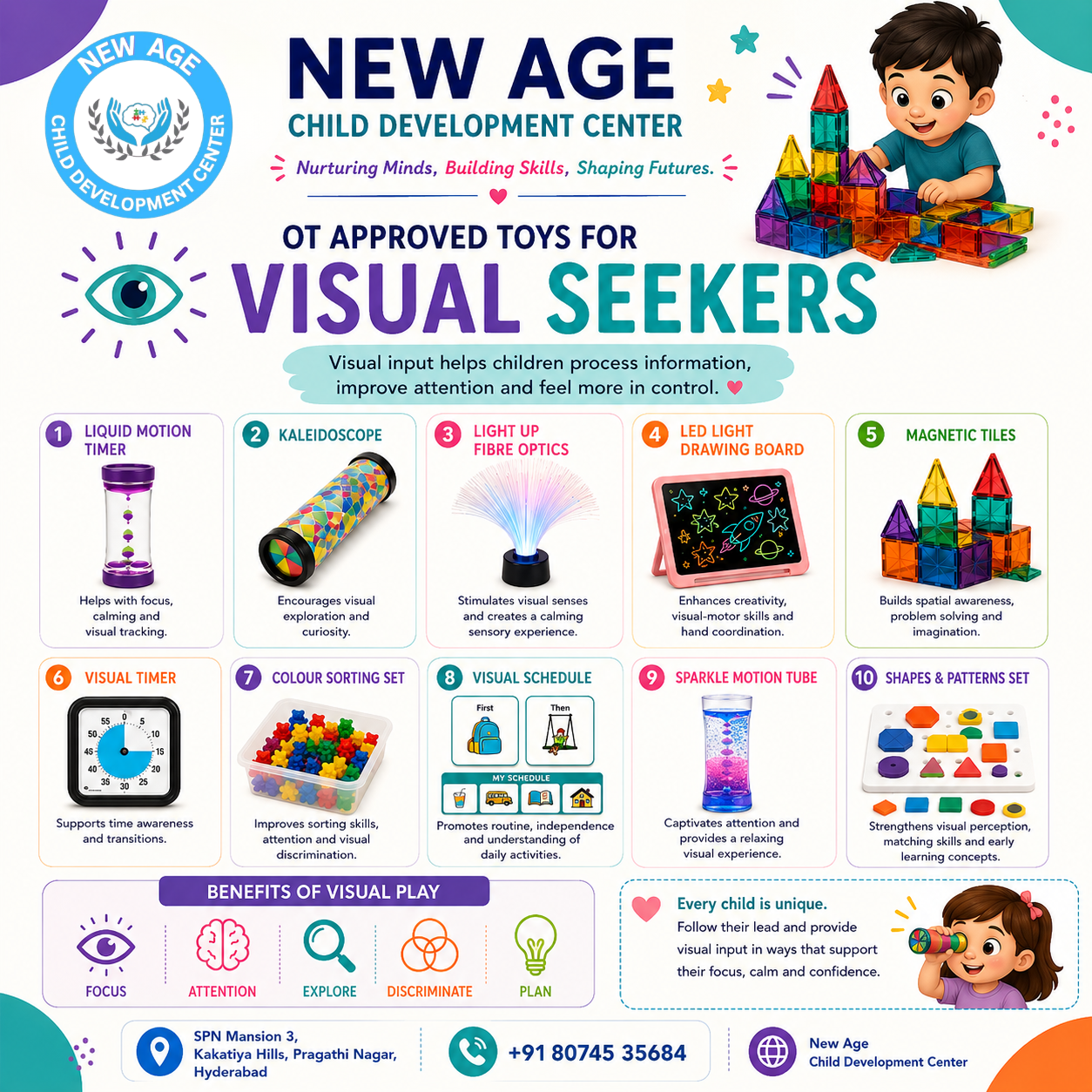
Familiar routines can help children understand what comes next and participate more actively. Visual schedules, step-by-step instructions and consistent practice may support everyday activities such as getting ready for school or organising belongings.
Independence develops gradually, and children may continue to need assistance with some tasks while learning others.
Signs Your Child May Benefit from Occupational Therapy
Children develop at different rates, but persistent difficulties with everyday activities may indicate that an assessment could be useful.
Consider consulting a qualified professional if your child regularly struggles with:
- Holding crayons or manipulating small objects.
- Using both hands together during activities.
- Managing age-appropriate dressing or self-care tasks.
- Participating in play activities requiring coordination.
- Coping with sensory experiences that affect everyday participation.
- Using classroom tools or completing age-appropriate motor tasks.
- Performing familiar daily routines with increasing independence.
These signs do not automatically mean that a child requires occupational therapy. An assessment can help determine whether the difficulties are related to motor skills, sensory processing, developmental differences or other factors.
Occupational Therapy for Children with Autism
Some children with autism spectrum disorder (ASD) experience differences in sensory processing, motor coordination, play or daily living skills.
Occupational therapy for autism may help children work towards individual goals, such as participating in self-care routines, using everyday materials, engaging in meaningful activities or managing environmental demands.
The approach should be personalised and respectful of the child’s communication style, sensory needs and preferences. The focus should be on functional participation and well-being rather than forcing a child to hide harmless behaviours or appear like everyone else.
Depending on the child’s needs, occupational therapists may collaborate with parents, teachers, speech-language therapists and other professionals.
The Role of Parents in Occupational Therapy
Parents can help children practise skills between therapy sessions by incorporating suitable activities into everyday routines.
Here are some practical ways to support development at home:
- Encourage independent attempts: Allow your child time to try age-appropriate tasks before stepping in to help.
- Make play meaningful: Use puzzles, blocks, drawing and other activities suited to your child’s abilities and interests.
- Practise daily routines: Include children in simple tasks such as putting away toys or choosing clothes.
- Break tasks into smaller steps: Smaller steps can make difficult activities easier to understand.
- Recognise effort: Encourage persistence and celebrate progress, even when it is gradual.
- Follow professional recommendations: Ask the therapist which activities are suitable for your child’s individual goals.
The aim is to create opportunities for practice without turning every activity into a test.
What Happens During an Occupational Therapy Session?
An occupational therapy programme generally begins with understanding the child’s needs and the activities that are challenging for them.
Initial assessment: The therapist discusses concerns with parents and evaluates relevant skills.
Goal setting: Practical goals are developed around the child’s everyday needs, such as improving pencil control or participating in dressing routines.
Individualised activities: Sessions may include play-based exercises, motor activities, sensory experiences or practice with functional tasks.
Parent guidance: Families may receive recommendations for supporting specific skills at home.
Progress review: The therapist reviews the child’s participation and adjusts activities or goals when necessary.
The frequency and duration of occupational therapy depend on the child’s needs, goals and progress.
Choosing a Child Occupational Therapist in Hyderabad
When looking for a child occupational therapist in Hyderabad, parents should consider the professional’s qualifications, experience with children and approach to individualised care.
Useful questions to ask include:
- What qualifications and experience does the therapist have?
- How will my child’s needs be assessed?
- What goals will therapy focus on?
- How will progress be reviewed?
- Will parents receive guidance for activities at home?
- How does the therapist adapt activities to my child’s interests and abilities?
A suitable therapist should explain the purpose of activities, involve parents in decision-making and develop goals that are meaningful for the child.
Occupational Therapy at New Age Child Development Center
New Age Child Development Center is associated with child development services in Hyderabad. Families who have concerns about their child’s motor skills, sensory experiences or everyday independence can contact the centre to enquire about available occupational therapy services and assessment options.
The centre can clarify which services are currently offered and whether they are suitable for a child’s specific needs.
Contact Details
- Phone: +91 80745 35684
- Website: www.newagecdc.in
- Location: Pragathi Nagar, Hyderabad — please confirm the current address before visiting.
Nurture • Support • Empower