

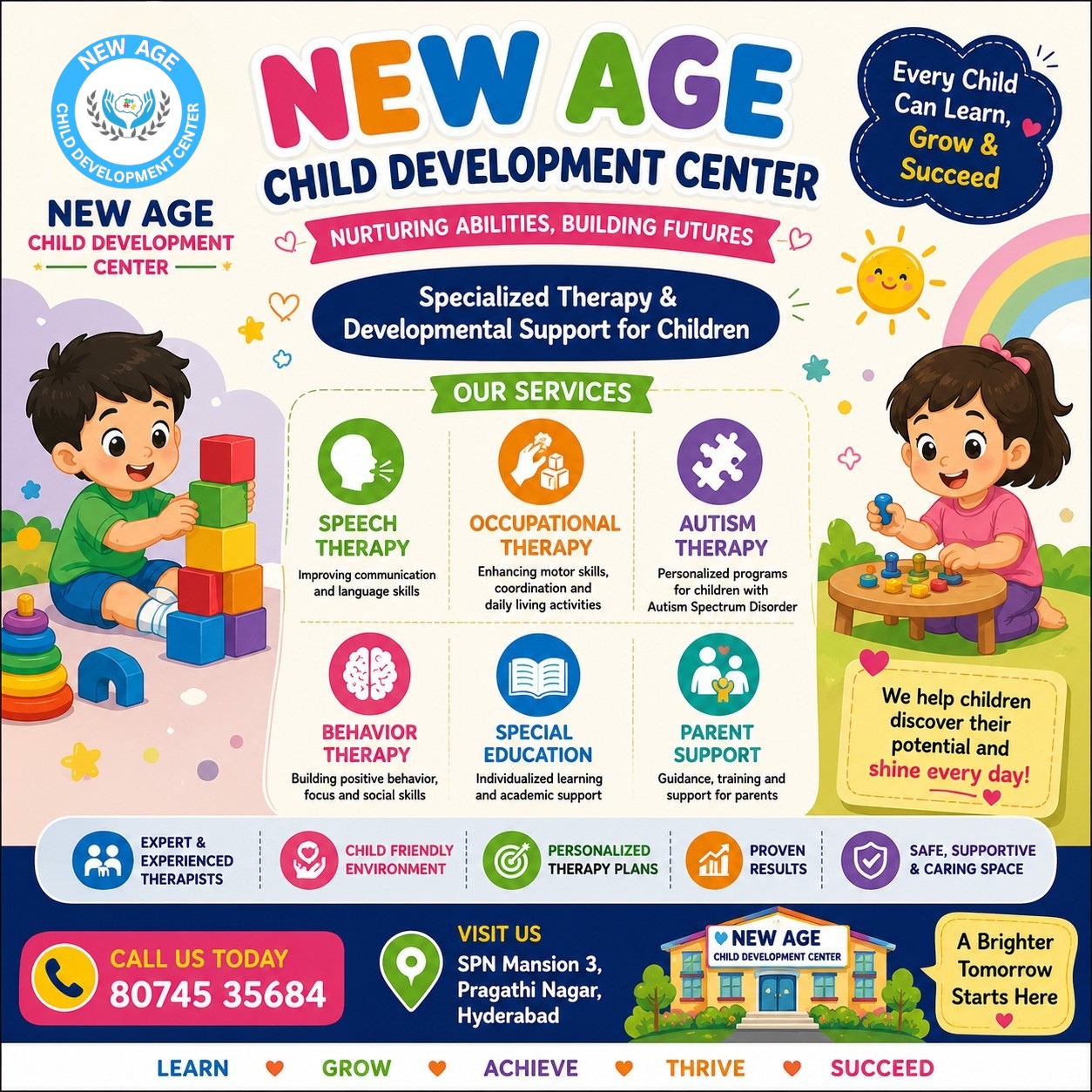
Learn how daily routines help children with autism thrive. New Age Child Development Center offers autism therapy, speech therapy, and occupational therapy in Hyderabad. Children with autism often feel more comfortable and confident when they follow predictable daily routines. Structured routines help reduce anxiety, improve behavior, and support emotional balance. Consistent schedules also help children understand expectations and develop important life skills. Parents searching for effective autism support strategies often find that routines play a major role in improving child development and daily functioning.
Children with autism may experience challenges with communication, social interaction, sensory processing, and adapting to change. Daily routines provide a sense of security and stability that helps children manage these challenges more effectively. Families looking for professional guidance and therapy support often trust New Age Child Development Center for personalized autism care and developmental therapy services.
Morning routines are especially important for children with autism. Waking up at the same time, following a predictable schedule, and preparing calmly for school or therapy sessions can improve emotional regulation. Simple visual schedules and step-by-step instructions help children complete tasks independently. At New Age Child Development Center, therapists guide parents on creating routines that support communication and positive behavior.
Meal times should also follow a regular schedule. Consistent eating routines help children feel comfortable and reduce stress during transitions. Some children with autism may have sensory sensitivities related to food textures, smells, or tastes. Structured meal routines and gradual exposure strategies can help children become more flexible and comfortable during eating activities.
Therapy routines are another important part of development. Speech therapy, occupational therapy, and behavior therapy sessions become more effective when children attend consistently and follow predictable schedules. New Age Child Development Center provides structured therapy programs that help children improve communication, sensory regulation, motor skills, and social interaction.
Speech therapy helps children improve language development, listening skills, and social communication. Many children with autism benefit from repetition and routine-based communication activities. Occupational therapy focuses on sensory integration, coordination, focus, and daily living skills. Behavior therapy teaches emotional control, attention skills, and positive behavior patterns. Parents often choose New Age Child Development Center because of its supportive and child-friendly therapy environment.
Playtime routines are equally important for children with autism. Structured play activities encourage creativity, social interaction, and learning. Activities such as puzzles, sensory games, building blocks, and role-play help children improve concentration and problem-solving abilities. Therapy centers and parents can use playful routines to support developmental growth naturally.
Bedtime routines also help children sleep better and feel emotionally secure. A calm nighttime routine that includes reading, soft lighting, and limited screen time can improve sleep quality. Children with autism often respond positively to consistent bedtime schedules because they know what to expect.
Parents should remember that flexibility is also important. While routines provide comfort, gradual changes help children adapt to new situations over time. Positive reinforcement, patience, and encouragement support smoother transitions and emotional growth.
Families searching for autism support and therapy services can visit New Age Child Development Center, located at SPN Mansion 3 Pragathi Nagar. The center provides expert therapy programs designed to support children with autism through structured learning and developmental care.
Consistent routines combined with professional therapy can help children with autism improve communication, confidence, emotional balance, and independence in daily life.